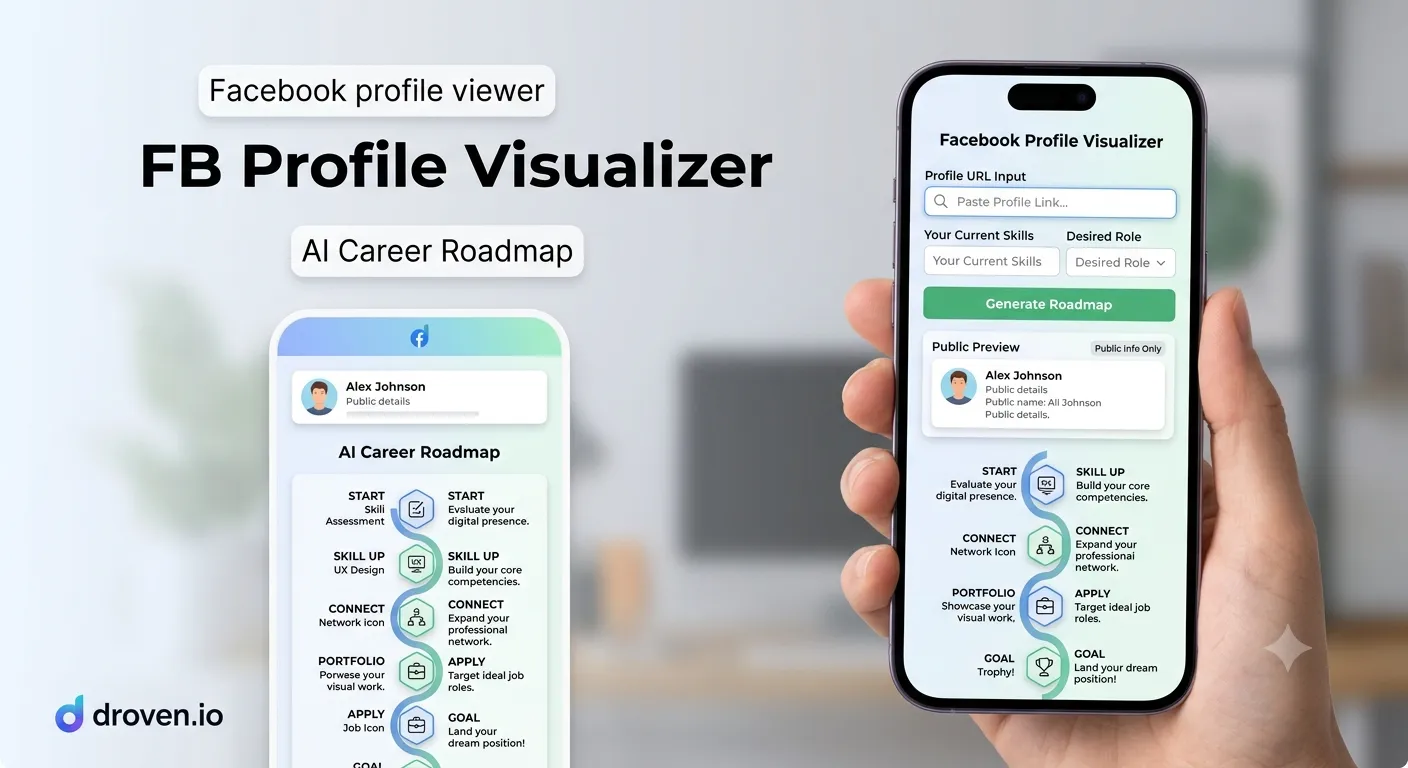
Breaking into artificial intelligence can feel like standing in front of a thousand open doors with no map. That’s exactly the problem the droven.io ai career roadmap is designed to solve — a structured, stage-by-stage learning path that takes you from complete beginner to job-ready AI professional. Instead of jumping between random tutorials, courses, and buzzwords, this roadmap gives you a clear sequence: what to learn first, what tools actually matter, and how to turn your skills into a real career.
Whether you’re a student, a career switcher, or a working professional looking to pivot into AI, this guide breaks down everything you need — skills, tools, certifications, salaries, and common mistakes — in one place.
💡 Quick Answer: The droven.io AI career roadmap is a structured learning framework that guides beginners through foundations, programming, mathematics, machine learning, specialization, and job readiness — typically over 9 to 18 months, depending on prior experience and study pace.
What is Droven.io AI Career Roadmap?
The droven.io ai career roadmap is best understood as a step-by-step learning and career framework for artificial intelligence. It’s not just a list of courses — it’s a full skill-building ecosystem covering the basics of AI, the right tools to learn, hands-on projects to build, and a path toward choosing a specialization.
Think of it like a GPS for your AI career. It shows you where to start, what to learn next, and how to reach your destination without wasting time on outdated methods or irrelevant topics.
At its core, this AI learning roadmap answers the questions most beginners actually ask:
- Where do I even start?
- Do I need to be a math genius?
- Should I learn machine learning or jump straight into generative AI?
- What projects will actually get me hired?
- Which AI career path pays the best?
Why AI Career Roadmaps Matter
Artificial intelligence is no longer confined to research labs. It now touches healthcare diagnostics, fraud detection, recommendation engines, customer support, marketing personalization, and software development. This widespread adoption has created enormous demand — but it has also created confusion.
The Problem With Learning AI Without a Plan
Without a roadmap, most learners fall into one of these traps:
- Jumping between unrelated tutorials without finishing any of them
- Learning tools before understanding the underlying fundamentals
- Skipping math and struggling later with model logic
- Collecting certificates without building real projects
- Feeling overwhelmed and giving up within a few weeks
A well-structured artificial intelligence career path removes this chaos. It sequences your learning so each stage builds on the last — programming before machine learning, machine learning before specialization, and specialization before job applications.
The Business Case for Structured Learning
Employers consistently value practical, demonstrable skills over memorized theory. A candidate who can walk into an interview with two or three real projects, a clear GitHub history, and a working understanding of deployment will almost always outperform someone with a stack of unused certificates.
Key Features of Droven.io AI Career Roadmap
The roadmap’s usefulness comes from a handful of core design principles that separate it from a generic list of “top AI courses.”
| Feature | What It Means for You |
|---|---|
| Stage-based structure | Learn in logical order — foundations, core skills, specialization, job readiness |
| Role-specific branches | Separate paths for ML engineers, data scientists, NLP engineers, and more |
| Practical project focus | Every stage ends with something you can show, not just something you memorized |
| Tool-agnostic foundations | Emphasis on concepts that outlast any single trending framework |
| Realistic timelines | No “learn AI in 30 days” promises — honest, achievable milestones |
| Career-readiness layer | Resume, portfolio, and interview preparation baked into the plan |
✅ Callout: Why This Matters Tools rise and fall in popularity, but strong fundamentals — data handling, statistical reasoning, evaluation, and clear communication — remain valuable for the entire length of your career.
Who Should Use Droven.io AI Career Roadmap?
This roadmap isn’t only for computer science graduates. It’s built to be flexible enough for multiple entry points into an AI career roadmap journey.
- Students who want a head start before graduating
- Career switchers coming from marketing, finance, teaching, or other non-technical fields
- Software developers looking to move into AI/ML specifically
- Data analysts who want to level up into data science or machine learning
- Non-technical professionals (product managers, business analysts) who want enough fluency to work alongside AI teams
- Freelancers and entrepreneurs who want to use AI tools to build products or services
No matter your starting point, the underlying idea is the same: follow a sequence instead of chasing every new trend.
Skills You Can Learn Through the Roadmap
A strong AI learning path blends both technical and non-technical skills. Many beginners focus only on tools and miss the soft skills that make technical knowledge usable in a real job.
Technical Skills
- Python programming
- SQL and data querying
- Statistics and probability
- Data cleaning and preprocessing
- Machine learning algorithms
- Neural networks and deep learning
- Natural language processing (NLP)
- Prompt engineering
- Cloud computing basics
- Model evaluation and deployment (MLOps basics)
Non-Technical Skills
- Problem framing and critical thinking
- Clear technical communication
- Documentation habits
- Ethical judgment around AI use
- Business and stakeholder understanding
- Collaboration within cross-functional teams
AI Career Paths Explained
One of the most valuable parts of the droven.io ai career roadmap is that it doesn’t force everyone down the same track. AI has multiple specializations, each with its own skill emphasis.
Machine Learning Engineer
Machine learning engineers build, train, and deploy models into production systems. This role blends software engineering with statistical modeling, and a machine learning engineer career typically requires strong coding skills alongside model deployment and monitoring experience.
Data Scientist
Data scientists focus on extracting insights from data using statistics, visualization, and predictive modeling. A data scientist career roadmap usually emphasizes SQL, exploratory data analysis, hypothesis testing, and communicating findings to non-technical stakeholders.
AI Engineer
AI engineers sit between research and application, building AI-powered features and integrating models into products. This path often overlaps with the broader AI engineer roadmap, combining backend development with applied machine learning.
NLP Engineer
Natural Language Processing engineers specialize in text and language-based AI systems — chatbots, translation tools, sentiment analysis, and large language model applications.
Computer Vision Engineer
Computer vision engineers work on image and video recognition systems used in areas like autonomous vehicles, medical imaging, and security systems.
Prompt Engineer
Prompt engineering has emerged as a distinct skill in the era of generative AI. A prompt engineering roadmap focuses on designing, testing, and refining prompts to get reliable, high-quality outputs from large language models.
AI Product Manager
AI product managers don’t necessarily write model code, but they need enough technical fluency to understand model capabilities, limitations, and data requirements while guiding product strategy.
Comparison Table: AI Career Paths at a Glance
| Role | Core Focus | Key Skills | Best For |
|---|---|---|---|
| Machine Learning Engineer | Building & deploying models | Python, ML algorithms, MLOps | Developers who like engineering |
| Data Scientist | Insights from data | Statistics, SQL, visualization | Analytical, curious minds |
| AI Engineer | Applying AI in products | Software dev + ML integration | Full-stack minded builders |
| NLP Engineer | Language-based AI | Text processing, transformers | Language & linguistics enthusiasts |
| Computer Vision Engineer | Image/video AI | CNNs, image processing | Visual/spatial problem solvers |
| Prompt Engineer | LLM interaction design | Prompt design, testing, LLM APIs | Strong communicators & testers |
| AI Product Manager | Strategy & coordination | Business + technical fluency | Cross-functional leaders |
Learning Path for Beginners
The beginner stage of the AI career roadmap is about building a foundation — not rushing into machine learning algorithms.
- Learn basic Python programming (variables, loops, functions, data structures)
- Understand fundamental statistics and probability concepts
- Get comfortable with data handling using spreadsheets and SQL
- Learn how to clean and organize datasets
- Explore beginner-friendly AI courses that explain core concepts without heavy math
- Build your first small project, like a simple prediction or classification script
📌 Callout: Beginner Tip Don’t chase every new AI tool you see online. Spend your first few months getting truly comfortable with Python and data basics — everything else builds on this.
Intermediate Learning Roadmap
Once foundations are solid, the intermediate stage introduces core machine learning concepts and practical tools.
- Study supervised and unsupervised learning algorithms
- Learn how to evaluate models (accuracy, precision, recall, F1-score)
- Practice with real datasets from public sources
- Get hands-on with libraries like scikit-learn
- Learn the basics of neural networks and deep learning
- Start experimenting with cloud platforms for training and deployment
- Build 2–3 portfolio-ready projects
Advanced AI Career Roadmap
The advanced stage of the roadmap focuses on specialization and job readiness.
- Choose a specialization (ML engineering, NLP, computer vision, or prompt engineering)
- Study advanced deep learning architectures (transformers, CNNs, RNNs depending on specialization)
- Learn MLOps concepts — model versioning, monitoring, and deployment pipelines
- Contribute to open-source AI projects
- Build a capstone project that mirrors real industry problems
- Prepare a polished portfolio and resume tailored to your chosen role
- Practice technical interviews and case studies
Essential Programming Languages
Programming is the backbone of any AI developer roadmap. While there are several languages used across the AI ecosystem, a few stand out as essential.
- Python — the primary language for AI and machine learning due to its simplicity and extensive libraries
- SQL — essential for querying and managing structured data
- R — useful for statistical analysis, particularly in data science roles
- Java or C++ — occasionally used in performance-critical AI systems and production environments
Featured Snippet Answer: What programming language is best for AI? Python is widely considered the best language for AI due to its readable syntax and extensive ecosystem of machine learning libraries like TensorFlow, PyTorch, and scikit-learn.
Mathematics Required for AI
Math often intimidates beginners, but the required level is more manageable than most people expect.
Core Mathematical Areas
- Linear Algebra — vectors, matrices, and transformations used in model computations
- Probability and Statistics — understanding uncertainty, distributions, and hypothesis testing
- Calculus — derivatives and gradients, especially for understanding how neural networks learn
- Discrete Math (optional but helpful) — logic and algorithms for certain AI applications
You don’t need to master research-level mathematics to start — a solid working understanding is enough to begin building and improve as you progress.
Recommended AI Frameworks and Libraries
Choosing the right tools accelerates your learning and mirrors what’s actually used in the industry.
| Category | Popular Tools |
|---|---|
| Machine Learning | scikit-learn, XGBoost |
| Deep Learning | TensorFlow, PyTorch, Keras |
| NLP | Hugging Face Transformers, spaCy, NLTK |
| Computer Vision | OpenCV, YOLO |
| Data Handling | pandas, NumPy |
| Visualization | Matplotlib, Seaborn |
| Deployment | Docker, FastAPI, cloud ML platforms |
Best Learning Resources
A strong AI learning roadmap blends structured courses, documentation, and hands-on practice.
- Official documentation for frameworks like TensorFlow and PyTorch (external resource suggestion: tensorflow.org and pytorch.org)
- University-backed online courses and specializations
- Research summaries and explainer articles for staying current
- Community platforms like Kaggle for practicing with real datasets (external resource suggestion: kaggle.com)
- YouTube channels and blogs that explain concepts visually
- Official labor market data for career planning (external resource suggestion: U.S. Bureau of Labor Statistics)
(Internal link suggestion: anchor text “compare top AI learning platforms” → /best-ai-learning-platforms)
Certifications That Add Value
While certifications alone won’t guarantee a job, the right ones can strengthen your resume when paired with real projects.
- Cloud provider machine learning certifications
- Deep learning specialization certificates from recognized platforms
- Data science professional certificates
- NLP or generative AI–focused certifications
⚠️ Callout: Certification Reality Check Certifications support your resume — they don’t replace the need for a project portfolio. Employers want to see applied skill, not just completed courses.
Portfolio Building Tips
A portfolio is often the deciding factor between candidates with similar resumes.
- Choose 3–5 projects that reflect your target role
- Document your process clearly, including challenges and decisions
- Host code on GitHub with clean, readable commits
- Deploy at least one project so it’s interactive, not just code
- Write short case studies explaining the business problem each project solves
- Keep improving older projects rather than abandoning them
Real-World AI Projects
Practical projects turn theory into demonstrable skill. Consider building:
- A recommendation system based on user behavior data
- A sentiment analysis tool for customer reviews
- An image classification model for a specific use case
- A chatbot using prompt engineering and an LLM API
- A predictive model for sales, pricing, or churn
- A simple computer vision tool for object detection
Each project should include a clear problem statement, your approach, results, and what you’d improve with more time.
Interview Preparation Guide
AI interviews typically test a mix of theoretical understanding and practical problem-solving.
What to Expect
- Technical screening — coding questions, often in Python
- Case studies — how you’d approach a real business problem with data
- Model and algorithm questions — explaining how specific models work
- System design — how you’d deploy and scale an AI solution
- Behavioral interview — communication, collaboration, and past project discussions
Preparation Checklist
- Practice explaining your portfolio projects out loud
- Review core machine learning concepts and be ready to explain them simply
- Practice coding problems on data structures and algorithms
- Prepare questions to ask interviewers about their AI infrastructure and team structure
Salary Expectations by AI Role
Compensation varies significantly by role, location, experience, and company size. The table below reflects general industry patterns rather than fixed figures, since exact numbers shift with market conditions and geography.
| Role | Entry-Level Focus | Growth Potential |
|---|---|---|
| Data Scientist | Strong analytical foundation | High — data-driven decision-making is in demand across industries |
| Machine Learning Engineer | Coding + model deployment skills | High — production ML skills are consistently sought after |
| AI Engineer | Applied AI integration | High — companies increasingly embed AI into core products |
| NLP Engineer | Language and text modeling | Strong — growth tied to generative AI adoption |
| Prompt Engineer | LLM interaction design | Emerging — newer role with growing demand |
| AI Product Manager | Technical + business fluency | Steady — leadership-track potential |
💡 According to the U.S. Bureau of Labor Statistics, data scientist employment is projected to grow significantly faster than average through the next decade, driven largely by expanding demand for data-driven decision-making across industries.
Common Mistakes to Avoid
Many learners derail their progress not from lack of talent, but from avoidable habits.
- Skipping fundamentals to jump straight into trendy tools
- Tool-hopping without mastering any single framework
- Collecting certificates instead of building projects
- Ignoring math entirely, which causes confusion later
- Learning in isolation without joining communities or getting feedback
- Underestimating soft skills like communication and documentation
- Comparing timelines with others instead of following a realistic personal pace
Advantages and Limitations of Droven.io AI Career Roadmap
Advantages
- Provides clear structure instead of scattered learning
- Covers both technical and non-technical skills
- Flexible enough for multiple starting points and career backgrounds
- Encourages practical, project-based learning
- Includes career-readiness elements like interview prep and portfolio building
Limitations
- Requires consistent self-discipline since it’s a framework, not a rigid course
- Timelines can vary widely based on prior experience and available study time
- Doesn’t replace hands-on mentorship or real workplace experience
- Success still depends on the learner’s own project execution and networking effort
Tips to Learn AI Faster
- Study in short, consistent sessions rather than occasional long cram sessions
- Build while you learn — apply each new concept to a small project immediately
- Teach what you learn, even informally, to solidify understanding
- Join AI communities for feedback, accountability, and networking
- Focus on one specialization once you’ve covered the fundamentals
- Track your progress with a simple checklist or learning journal
- Review foundational math and stats periodically, since they support everything else
Frequently Asked Questions
1. What exactly is the droven.io ai career roadmap? It’s a structured, stage-based learning framework that guides beginners through foundational skills, core machine learning concepts, specialization, and job readiness for an AI career.
2. How long does it take to complete the roadmap? Most learners take roughly 9 to 18 months, depending on prior technical background, weekly study time, and chosen specialization.
3. Do I need a computer science degree to start? No. Many successful AI professionals come from non-technical backgrounds. What matters more is consistent practice, strong fundamentals, and a solid project portfolio.
4. Is Python necessary for an AI career? Yes, in almost all cases. Python is the most widely used language in AI due to its simple syntax and extensive library support for machine learning and data science.
5. How much math do I really need to learn AI? You need a working understanding of linear algebra, probability, statistics, and basic calculus — not research-level mathematics. This knowledge deepens naturally as you progress.
6. Which AI career path pays the best? Machine learning engineering and applied AI engineering roles often offer strong compensation due to the technical depth required, but data science and NLP roles are also highly competitive in pay.
7. Can I switch to an AI career from a non-technical job? Yes. Many career switchers succeed by following a structured learning path, building relevant projects, and gradually transitioning through freelance work or junior roles.
8. What’s the difference between a data scientist and a machine learning engineer? Data scientists focus more on extracting insights and communicating findings from data, while machine learning engineers focus on building and deploying production-ready models.
9. Do certifications matter for getting an AI job? Certifications can strengthen a resume, but employers generally prioritize demonstrated skill through real projects and practical problem-solving ability.
10. What is the fastest-growing specialization within AI right now? Generative AI and prompt engineering have seen rapid growth in recent years, alongside continued strong demand for data science and machine learning roles.
Final Thoughts
The path into artificial intelligence doesn’t have to feel like guesswork. By following a structured droven.io ai career roadmap — starting with programming and math fundamentals, progressing through core machine learning concepts, and specializing in a role that fits your strengths — you can move from curiosity to a genuine, job-ready AI career.
The field rewards consistency far more than raw talent. Learners who follow a clear sequence, build real projects, and keep refining their skills consistently outperform those who chase every new trend without a plan.
Ready to start your AI journey? Pick your starting point today, commit to the first stage of the roadmap, and begin building your very first project this week — your future AI career starts with a single, well-planned step.