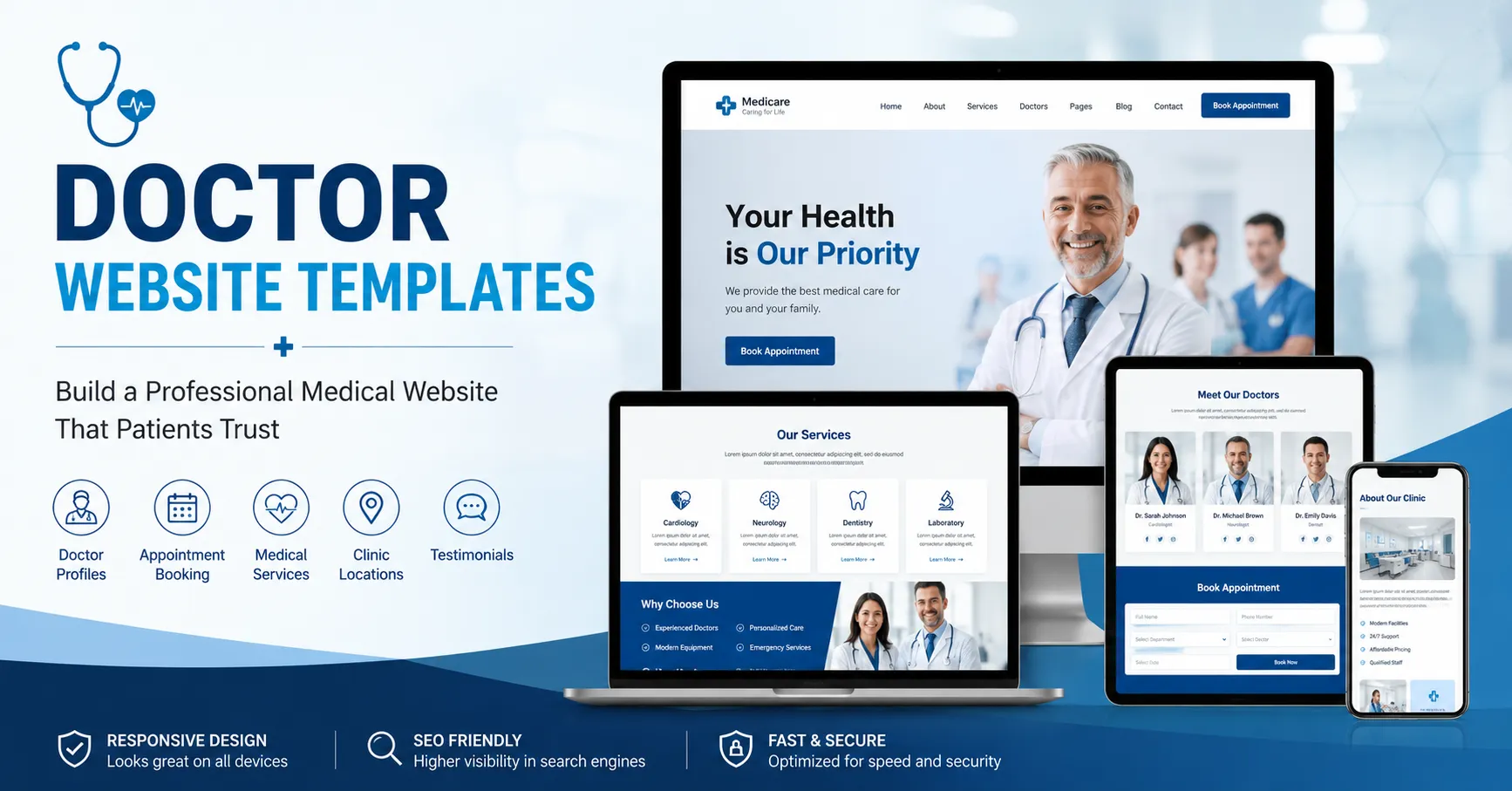
A medical website is often the first place where potential patients learn about a doctor, clinic, hospital, or healthcare service. Before making an appointment, people commonly want to know who the doctor is, what services are available, where the clinic is located, and how they can get in touch. A professional website can provide these answers quickly and clearly.
Doctor website templates make the process of building a healthcare website much easier. Instead of designing every page from scratch, healthcare professionals can start with a structured layout created specifically for medical websites. The right template can include important sections for doctor profiles, medical services, appointment requests, clinic information, testimonials, and contact details.
A well-designed healthcare website should do more than look attractive. It should make information easy to find and create confidence in the medical professional. Patients should be able to understand a doctor’s qualifications, specialties, experience, consultation options, and location without navigating through confusing pages.
Mobile responsiveness is particularly important because many patients access websites using smartphones. A template that automatically adapts to different screen sizes can provide a consistent experience across phones, tablets, and computers. Buttons, forms, menus, and appointment information should remain easy to use on smaller screens.
Search engine optimization is another important consideration. A website needs a logical structure that allows search engines to understand its pages and content. Proper headings, descriptive page titles, fast-loading pages, useful content, internal links, and mobile compatibility can help create a stronger technical foundation for organic search visibility.
Whether the website represents an individual doctor, specialist, dental professional, clinic, or larger healthcare organization, choosing the right template can save development time while providing a professional foundation. The goal is to create a website that serves both the healthcare provider and the patient.
Essential Features of the Best Doctor Website Templates
1. Professional Doctor Profile Pages
A doctor profile should give patients a clear understanding of the healthcare professional. It can include the doctor’s name, specialty, qualifications, professional experience, areas of expertise, consultation information, and profile photograph.
A strong profile page should prioritize useful information rather than filling the page with unnecessary design elements. Patients should quickly understand why the doctor may be relevant to their healthcare needs.
2. Online Appointment Functionality
Appointment functionality can make a healthcare website significantly more useful. Instead of asking visitors to search for a phone number or visit another platform, the website can provide a clear appointment button.
An effective appointment section may include:
- Doctor or specialist selection
- Consultation type
- Available consultation location
- Appointment date and time
- Patient contact details
- Confirmation information
- Clear instructions after submission
The process should remain simple because complicated forms can discourage visitors from completing an appointment request.
3. Mobile-Responsive Design
A medical website should work smoothly on every common screen size.
Responsive doctor website templates automatically adjust layouts, images, navigation menus, forms, and typography according to the visitor’s device. This is especially important for patients searching for healthcare information while using smartphones.
A mobile-friendly design can also improve usability because visitors do not need to constantly zoom, scroll horizontally, or struggle with small buttons.
4. Medical Services and Specialty Sections
A healthcare website should clearly explain the services offered by the doctor or clinic. Separate service pages can provide more detailed information about specific treatments, consultations, procedures, or specialties.
For example, a specialist website might organize services into categories such as:
- Cardiology
- Dermatology
- Pediatrics
- Dentistry
- Orthopedics
- Gynecology
- Neurology
- General medicine
Well-organized service pages can also provide additional opportunities to target relevant search queries.
5. Contact and Location Information
Patients need straightforward access to practical information. A good template should provide a dedicated contact area containing the clinic’s address, phone number, consultation hours, email address, and other relevant details.
A map integration can make the physical location easier to find, particularly for patients visiting the clinic for the first time.
How to Choose the Right Doctor Website Template
Start With the Website’s Main Purpose
Before selecting a template, identify what the website needs to accomplish. An individual physician may primarily need a professional profile, services, appointment form, and contact page. A large clinic may require multiple doctor profiles, departments, services, locations, and educational resources.
Choosing a template based on the actual website structure prevents unnecessary customization later.
Evaluate Design and Usability
Good medical design should communicate professionalism without overwhelming visitors.
Look for clean typography, logical navigation, readable content, appropriate spacing, and clearly visible calls to action. Healthcare websites should generally prioritize clarity over decorative design.
Visitors should be able to find essential information within a few clicks.
Check Customization Options
A template should allow you to change important elements such as:
- Logo and branding
- Colors
- Typography
- Header and navigation
- Doctor profile layouts
- Service sections
- Contact forms
- Appointment buttons
- Footer information
Flexible customization makes it easier to create a unique healthcare website rather than another site that looks identical to dozens of competitors.
Consider Speed and Technical Performance
Website performance affects both user experience and search visibility. Heavy animations, oversized images, unnecessary scripts, and poorly optimized templates can make pages slow.
Choose a lightweight template and optimize images before uploading them. A fast website helps visitors access important medical information without unnecessary waiting.
Check Security and Maintenance Requirements
Healthcare websites should treat security seriously. Contact forms and appointment systems may collect personal information, so administrators should use secure hosting, HTTPS, updated software, strong passwords, and reputable plugins or integrations.
Templates should also receive appropriate maintenance and compatibility updates when they are part of a larger website platform.
SEO and User Experience for Medical Websites
Create Search-Friendly Page Structures
SEO-friendly doctor website templates should make it easy to organize content with logical heading structures. Each page should focus on a clear topic and provide useful information instead of attempting to target every keyword on a single page.
For example, a doctor website could have separate pages for the doctor’s profile, specialties, services, locations, appointment information, and frequently asked questions.
This structure helps users navigate the site and gives search engines clearer signals about what each page represents.
Use Local SEO Strategically
Most doctors and clinics serve specific geographic areas. Therefore, local SEO can be particularly valuable.
Include relevant location information naturally in the website’s content, page titles, headings, contact details, and service pages. A dedicated location section can also help patients understand where consultations are available.
A healthcare directory such as Dhaka Doctor BD can also be relevant when patients are researching doctors and healthcare providers in Dhaka.
Improve Internal Linking
Internal links connect related pages within the same website. They can guide visitors from a doctor’s profile to their specialties, from a service page to an appointment page, or from an educational article to a relevant medical service.
A logical internal linking structure improves navigation and helps search engines discover and understand important pages.
Make Content Easy to Scan
Medical information can sometimes be difficult to understand. Use short paragraphs, descriptive headings, lists, tables where appropriate, and clear explanations.
The best healthcare content answers patient questions without unnecessary complexity.
Avoid large blocks of text when a short list or subsection can communicate the same information more effectively.
Building a Trustworthy Doctor Website That Converts
Show Credentials Clearly
Patients want confidence before contacting a healthcare professional. Display relevant qualifications, certifications, professional memberships, areas of specialization, and experience in an organized manner.
Do not hide important credentials deep inside the website. A well-designed profile should make essential professional information easy to find.
Add Genuine Patient Reviews and Testimonials
Patient feedback can provide valuable social proof. If testimonials are used, they should be authentic and presented responsibly.
Reviews should support the website’s credibility rather than becoming the main focus of the page. The doctor’s expertise, services, and patient experience should remain central.
Use Strong Calls to Action
Every important page should give visitors a logical next step.
Examples include:
Book an Appointment
Contact the Clinic
View Doctor Profile
Call for Consultation
Find Clinic Location
Clear calls to action reduce friction and help visitors move from information gathering to taking action.
Provide Helpful Medical Content
A healthcare website can build authority by publishing genuinely useful educational content. Blog articles may answer common patient questions, explain medical terminology, discuss preparation for appointments, or provide general health education.
Content should remain accurate, responsible, and appropriate for the intended audience. Medical claims should never be exaggerated simply to attract search traffic.
Prioritize Accessibility
A professional healthcare website should be usable by as many people as possible. Use readable fonts, sufficient contrast, descriptive image text, logical navigation, keyboard-friendly elements, and clearly labeled forms.
Accessibility improvements can benefit everyone, including older visitors and people using mobile devices or assistive technologies.
Create a Clear Patient Journey
A high-quality doctor website should guide visitors naturally:
- Discover the doctor or service
- Review qualifications and expertise
- Understand available services
- Check location and consultation information
- Read relevant educational content or reviews
- Choose an appointment or contact option
This structure combines SEO with conversion-focused user experience.
Conclusion
Choosing the right doctor website templates is an important step toward creating a professional, trustworthy, and search-friendly healthcare website. The best template is not necessarily the one with the most visual effects or the largest number of features. Instead, it should provide the right balance between design, usability, performance, SEO, accessibility, security, and healthcare-specific functionality.
A strong doctor website should make important information immediately accessible. Patients should be able to understand a doctor’s qualifications, specialties, services, location, and appointment options without unnecessary effort.
Responsive design is equally important because healthcare websites must work effectively across smartphones, tablets, and desktop computers. Fast loading times, clear navigation, optimized content, and logical internal linking can further improve the overall experience.
SEO should also be considered from the beginning rather than added as an afterthought. A well-structured template can provide the technical foundation needed to organize service pages, doctor profiles, location pages, and educational content around relevant search intent.
Ultimately, the purpose of doctor website templates is to simplify website development while creating a digital experience that patients can trust. When the template, content, SEO strategy, and user experience work together, a medical website can become more than an online business card—it can become an effective resource for patients and a valuable digital channel for growing a healthcare practice.