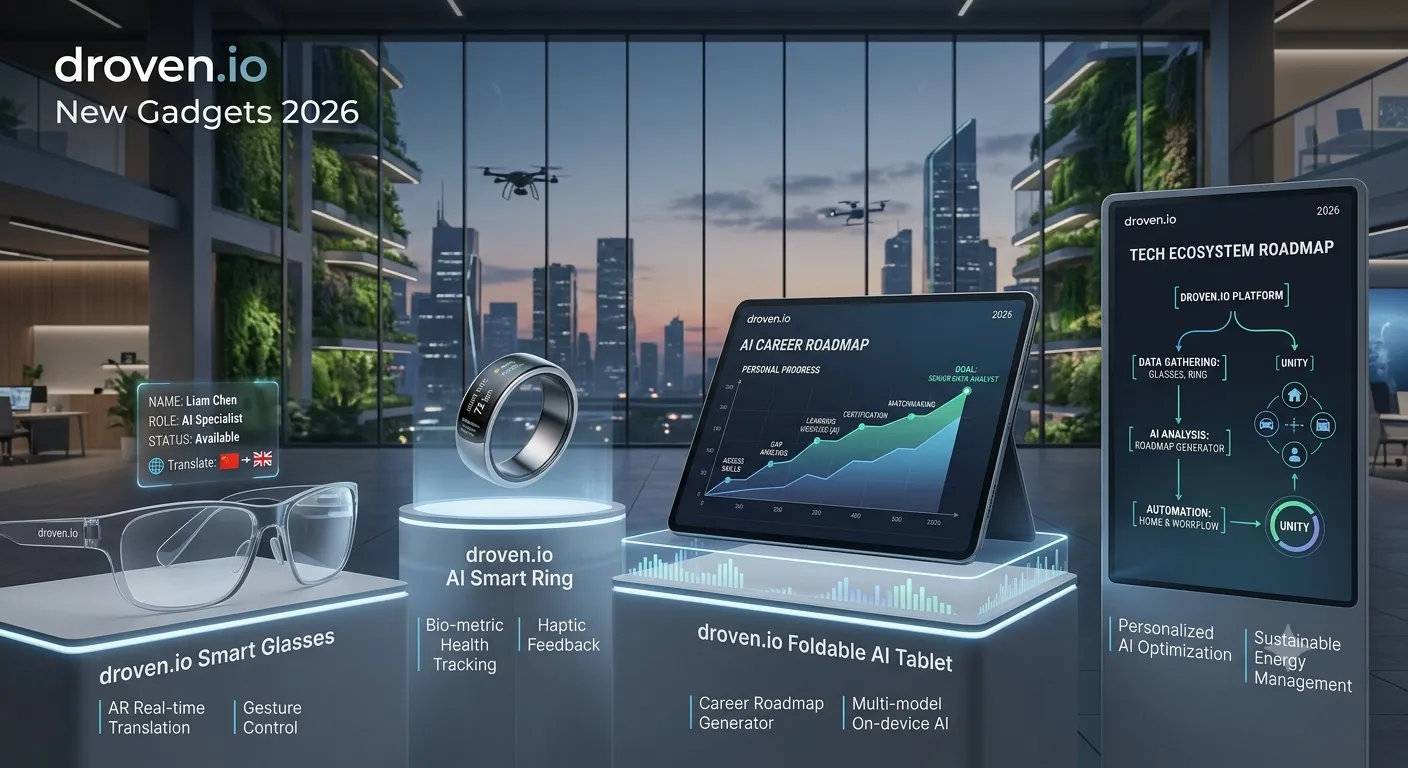
Technology moves fast, and 2026 is proving to be one of the most exciting years yet for consumer gadgets. From smarter wearables to home devices that practically think for themselves, this year’s lineup blends convenience with genuine innovation. Searches around droven.io new gadgets 2026 reflect a growing appetite for curated, trustworthy breakdowns of what’s actually worth buying versus what’s just hype. This guide walks through the biggest categories, the standout features to look for, and practical tips for choosing gadgets that fit your lifestyle — not just your wish list.
What’s Driving the Wave of New Gadgets in 2026
The gadget industry in 2026 is being shaped by a few powerful forces working together at once. Artificial intelligence has moved from a marketing buzzword into an actual feature baked directly into everyday devices, changing how people interact with their phones, speakers, and even kitchen appliances. Chipmakers have also pushed processing power further while shrinking battery drain, which means devices last longer between charges without sacrificing speed.
Consumer expectations have shifted too. Buyers no longer want a single-purpose device sitting on a shelf; they want tools that adapt, learn, and integrate with everything else they already own. This demand has pushed manufacturers to prioritize cross-device compatibility, cloud syncing, and voice-first controls as standard rather than premium add-ons.
Sustainability is another quiet but significant driver. More brands are using recycled materials, modular designs, and repairable components, responding to both regulatory pressure and a genuine shift in buyer preference toward longer-lasting products. This is changing how gadgets are built from the inside out, not just how they look on the outside.
Supply chains have also stabilized considerably compared to previous years, allowing companies to release more ambitious products without the delays and shortages that slowed innovation before. That stability has given smaller, independent gadget makers room to compete alongside established giants, resulting in a more diverse and interesting market overall.
Finally, the line between “smart” and “ordinary” has almost disappeared. Items that once had no connectivity at all — mirrors, water bottles, even doormats — now come with sensors and companion apps. This blending of categories is exactly why guides covering droven.io new gadgets 2026 are becoming so useful: the sheer variety makes it harder to know where to start.
Together, these shifts explain why 2026 feels like a genuine turning point rather than just another incremental tech cycle.
Top Categories of New Gadgets 2026
Where the Biggest Innovation Is Happening
Not every gadget category is moving at the same pace. Some areas are seeing rapid, headline-grabbing change, while others are refining what already works. Here’s where attention is concentrated this year:
- AI-powered wearables – smartwatches and rings that track health metrics with clinical-level accuracy
- Smart home hubs – single devices that unify lighting, security, and climate control
- Portable power solutions – compact, high-capacity chargers and solar-based backups
- Personal audio tech – earbuds with real-time translation and adaptive noise control
- Compact creator tools – lightweight cameras and mics built for content creators on the move
Each of these categories reflects a broader theme: gadgets are becoming smaller, smarter, and far more personalized than before. Instead of generic features, devices are increasingly tailored to specific habits, whether that’s fitness tracking, remote work, or content creation.
Smart Home and Wearable Innovations
Everyday Devices Getting a Serious Upgrade
Smart home and wearable technology represent two of the fastest-growing segments this year, and both are seeing meaningful, practical upgrades rather than superficial changes.
- Adaptive lighting systems that adjust color temperature based on time of day and detected mood
- Health-focused wearables capable of tracking sleep cycles, stress levels, and even hydration
- Voice-first smart displays that respond naturally without requiring a wake word every time
- Energy-monitoring plugs that show real-time electricity usage down to individual appliances
- Modular smart hubs that let users add or remove sensors as their needs change
It’s worth noting that many of these devices now share data across ecosystems, meaning a wearable can trigger a smart home response automatically — dimming lights when it detects you’re winding down for the night, for example. This kind of quiet automation is quickly becoming the norm rather than a novelty, and it’s a major reason interest in droven.io new gadgets 2026 continues to grow among everyday consumers, not just tech enthusiasts.
How to Choose the Right New Gadget in 2026
Practical Buying Advice That Actually Helps
With so many options available, picking the right gadget can feel overwhelming. A few grounded questions can help narrow things down quickly.
Start by asking whether the device solves a real, recurring problem in your daily routine, rather than simply looking impressive in a demo video. Gadgets bought on impulse are the ones most likely to end up unused in a drawer within a few months.
Next, consider compatibility with what you already own. A brilliant device that doesn’t sync well with your existing phone, speakers, or smart home setup will quickly become frustrating rather than helpful. Checking supported ecosystems before purchasing can save real headaches later.
Battery life and build quality matter more than flashy specs in most cases. A gadget that needs daily charging or feels flimsy after a few weeks of use isn’t a good long-term investment, no matter how advanced its features sound on paper.
Finally, pay attention to software support. Many gadgets are only as good as the updates behind them, and devices from companies with a track record of long-term support tend to age far better than cheaper alternatives that get abandoned after a year.
Where to Find Reliable Gadget Reviews and Buying Guides
Cutting Through the Noise
With so much marketing content flooding search results, finding genuinely useful reviews has become its own challenge. Independent guides and comparison articles tend to be more reliable than manufacturer pages, simply because they aren’t trying to sell you anything directly.
Look for sources that test devices over several weeks rather than relying on first-impression reviews. Long-term usage notes — battery degradation, app reliability, customer support responsiveness — tend to reveal far more than a polished unboxing video ever could.
It also helps to cross-reference multiple independent write-ups rather than trusting a single source. Patterns across several reviews, especially when they mention the same strengths or the same recurring issues, are usually a stronger signal than any one glowing recommendation.
Conclusion
The gadget landscape in 2026 is defined by smarter integration, longer-lasting hardware, and devices that quietly adapt to how people actually live rather than demanding attention on their own terms. Whether you’re drawn to health-focused wearables, smarter home hubs, or portable tools built for creators, the smartest approach is still the simplest one: identify a real need, check compatibility, and prioritize long-term reliability over short-term hype. As interest in topics like droven.io new gadgets 2026 continues to grow, staying grounded in these practical basics will help you choose devices that genuinely earn a place in your daily routine — not just a spot on a shelf.